

There’s a quiet gap in the gaming industry. Not a technical one. Not a creative one. A linguistic one.
Most games are built with incredible care. Mechanics are refined. Art is polished. Systems are tested. But language?
Language often arrives late. Sometimes too late. And when it does, it feels like a problem to solve, not a system to design.
That’s where the bridge breaks.
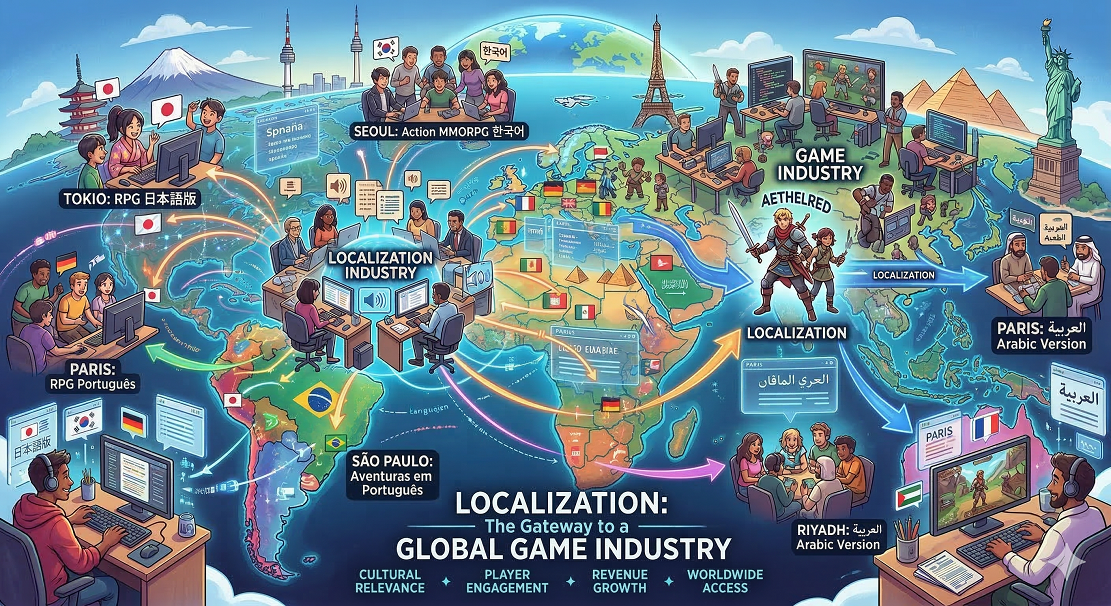
Language Is Still Being Underestimated
There’s a common belief that language is simple. That it’s just words. Replace them, translate them, move on. And now, with AI, that belief feels even stronger.
“If a machine can translate it, how complex can it be?”
But language is not a fixed system. It’s not a set of rules sitting quietly in a database. It behaves more like clay. It changes depending on who is using it, where it’s used, and why.
A sentence in a game is not just information. It carries tone, intent, rhythm, emotion. And those things don’t translate cleanly.
They need to be interpreted.
Developers Don’t Learn Localization. Until It Hurts
Most game developers don’t ignore localization on purpose. They simply don’t encounter it early enough.
When you learn how to build a game, you focus on:
- mechanics
- design
- code
- performance
- art
These are the visible parts. The tangible ones. Language sits somewhere in the background. Until the moment the game is almost ready. And then localization appears.
Not as part of the system. But as a last step. At that point, everything is already built. Which means language has to adapt to the game, instead of the game being prepared for language.
That’s where friction begins.
English Became the Default. And That Changed Everything
Gaming grew up in English. Not by design, but by habit.
Players around the world got used to consuming games in English. Some even learned the language through games.
That created a strange normalization. On one side, native English speakers assume everyone can play in English. On the other, non-native players often accept it as the default.
“Just play it in English.”
But accessibility is not the same as experience. Understanding a game is not the same as feeling it.
And when localization is treated as optional, entire audiences are left slightly outside the experience. Not excluded.
But not fully included either.

Then Comes the Real Constraint: Money
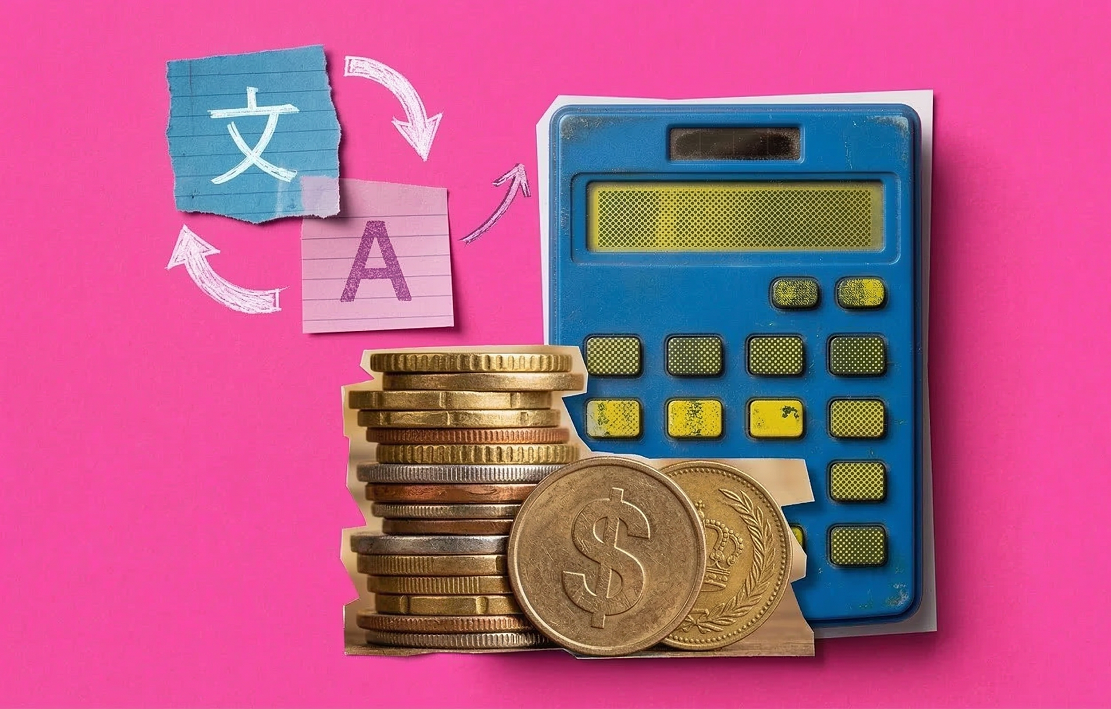
For an indie developer, localization is not philosophical. It’s practical. It costs money. And when budgets are tight, language becomes a trade-off.
You can invest in:
- better visuals
- better mechanics
- better marketing
Or translation. And translation feels less visible.
So the reasoning becomes simple: “Why pay for this if AI can do something close enough?”
At that moment, localization stops being part of the product. It becomes a cost to minimize.
The Irreversible Shift: LLMs Are Not Going Away
There’s something else happening in parallel. And it’s easy to underestimate it. Large language models are not a trend. They are infrastructure.
The behavior has already changed: Press a button. Get a translation. Move on. That expectation will not reverse. It will accelerate.
Models will become better. Faster. Cheaper. More embedded into every tool developers use.
So the question is no longer: “Should we use AI for translation?”
That question is already behind us. The real question is: What happens after the first translation?
When Everything Becomes Translatable, Everything Becomes Strategic
A few years ago, many games were never translated. Not because people didn’t want to. But because it was too expensive. Too slow. Too complex.
Now, everything can be translated. Instantly. That changes the landscape. Because translation is no longer the barrier. Decision is.
If every game can reach every market, then:
- Which markets are worth investing in?
- Which languages deserve refinement?
- Which communities deserve a better experience?
Machine translation doesn’t answer these questions. It only exposes them faster.
.png)
The Real Problem Is Not Deployment. It’s Maintenance
Shipping translations is easy. Maintaining them is not. This is where most localization efforts begin to break.
A game evolves. Dialogue changes. UI gets updated. New features appear.
Now what?
- Which languages are outdated?
- What exactly changed?
- What needs to be retranslated?
- Who decides what is “good enough”?
Without structure, localization becomes fragile. Not because the translation was wrong. But because it cannot keep up with change.
And games, by nature, are always changing.
The Risk No One Talks About: Silent Brand Drift
There is a subtle risk in scaling translation without structure. Not catastrophic errors. Something quieter. Your game starts to drift.
A term changes slightly in one update. A character’s tone shifts in another. A key concept gets translated differently over time.
Nothing breaks immediately. But consistency disappears. And consistency is what makes a world believable.
Especially in games.
The Missing Piece: Consistency
One of the biggest invisible problems in game localization is not translation quality. It’s inconsistency.
The same term translated in five different ways. The same character sounding different across scenes. The same mechanic described with different wording. This happens because translation is treated as isolated tasks.
But language in games is not isolated. It’s a system. This is where even a minimal structure can change everything.
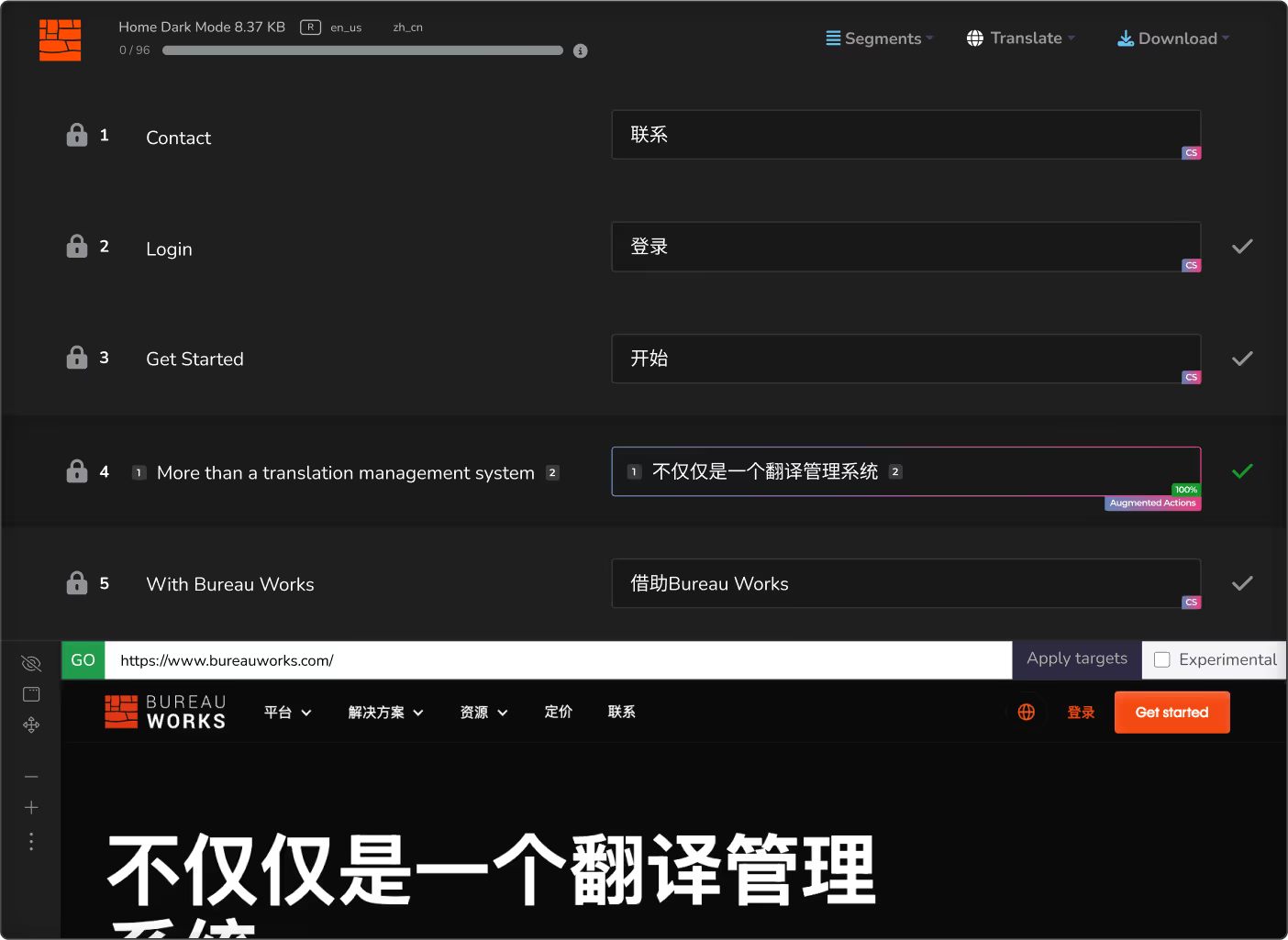
A simple glossary, for example, already creates alignment. It defines how key terms should behave across the entire game.
When that glossary connects with translation memory and context-aware workflows, something shifts. The machine stops guessing. It starts aligning.
Platforms like Bureau Works build on this idea by treating language as a connected system. Glossary, tone, and memory are not separate elements, they work together. This allows teams to scale translation while keeping consistency intact, even as the product evolves.
It’s not about adding complexity. It’s about removing randomness.
Localization Needs to Move Upstream
If localization only appears at the end, it will always feel expensive. Because at that point, everything is already fixed. And language has to adapt under pressure.
But when localization is considered earlier:
- content is written more clearly
- systems are built with flexibility
- terminology is defined upfront
- updates become easier to manage
The cost doesn’t disappear. But it becomes predictable. And more importantly, it becomes strategic.
The Role of the Localization Industry Is Changing
The industry doesn’t need to fight AI. That conversation is already settled.
What it needs to do is explain something more valuable: Why structure matters.
Why:
- consistency matters
- maintenance matters
- context matters
- systems matter
Anyone can generate a translation. But not everyone can build a system that keeps meaning intact over time. That’s the difference.
The Bridge Is Already Being Built
This gap between developers and localization is real. But it’s not permanent.
More developers are becoming aware of it. More translators are speaking about it. More tools are being built to support it earlier in the process.
Localization is slowly moving upstream. Closer to design. Closer to development. Closer to decision-making.
And when that happens, something changes. Language stops being a problem. It becomes part of the product.
If your team is building games or digital products across multiple languages, the challenge is not just translating content.
It’s keeping language consistent, scalable, and aligned as your product evolves.
Bureau Works helps teams manage localization as a system, combining glossaries, translation memory, and AI-powered workflows so language stays consistent across every update, every feature, and every market.
👉 Create your account and start building localization into your process, not around it.
Unlock the power of glocalization with our Translation Management System.
Unlock the power of
with our Translation Management System.