

When people search for “locale meaning,” they usually expect a quick definition.
Something like: “A locale is a combination of language and regional settings”.
Technically, that’s correct.
But if you work with software, websites, or global products, you quickly realize that a locale is far more than a technical label.
It is the difference between a product that simply exists in another language and a product that actually belongs in another market.
What Does “Locale” Mean?
In localization, a locale represents a specific combination of language and regional conventions.
It typically includes elements like:
- Language
- Country or region
- Date and time formats
- Currency formats
- Number formatting
- Measurement systems
- Cultural conventions
For example:
- en-US – English used in the United States
- en-UK – English used in the United Kingdom
- pt-BR – Portuguese used in Brazil
- pt-PT – Portuguese used in Portugal
At first glance, these might seem like small variations. But anyone who has worked in localization knows that these differences shape the entire user experience.
Why Locale Matters More Than Language
Many companies start international expansion with a simple assumption: “If we translate the text, we’re done.”
But translation alone rarely solves the real problem. Consider a few examples.
A Brazilian customer expects prices in reais, not dollars. A German user expects numbers written as 1.000,50, not 1,000.50. A French audience may respond very differently to tone than an American audience.
These aren’t translation issues. They are locale issues.
Localization is not only about words. It’s about aligning a product with the expectations of a specific market.
Locales in Software and Digital Products
In software development, locales often appear in configuration files, APIs, and internationalization frameworks. Developers rely on locale identifiers to determine how content should behave.
A locale can influence things like:
- formatting rules
- UI layout behavior
- text direction
- sorting conventions
- address formats
- phone number structures
This is why global companies invest heavily in internationalization (i18n) before localization even begins.
Internationalization prepares a system to handle multiple locales. Localization then adapts the experience for each one. Without this separation, scaling across markets becomes extremely difficult.
The Hidden Complexity of Managing Locales
As soon as a company expands beyond two or three languages, managing locales becomes a real operational challenge.
Suddenly you are dealing with:
- dozens of languages
- multiple regional variations
- different terminology requirements
- evolving product content
- ongoing updates
Localization stops being a one-time translation task. It becomes an ongoing system of language governance. And this is where localization platforms start to play a critical role.
Where Localization Platforms Fit Into the Picture
Managing locales efficiently requires more than translation tools.
Teams need infrastructure that can handle:
- translation memories
- terminology management
- contextual review
- multilingual workflows
- quality checks
- collaboration between linguists and product teams
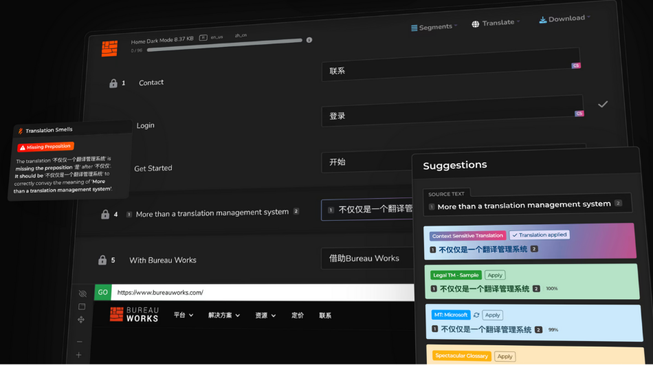
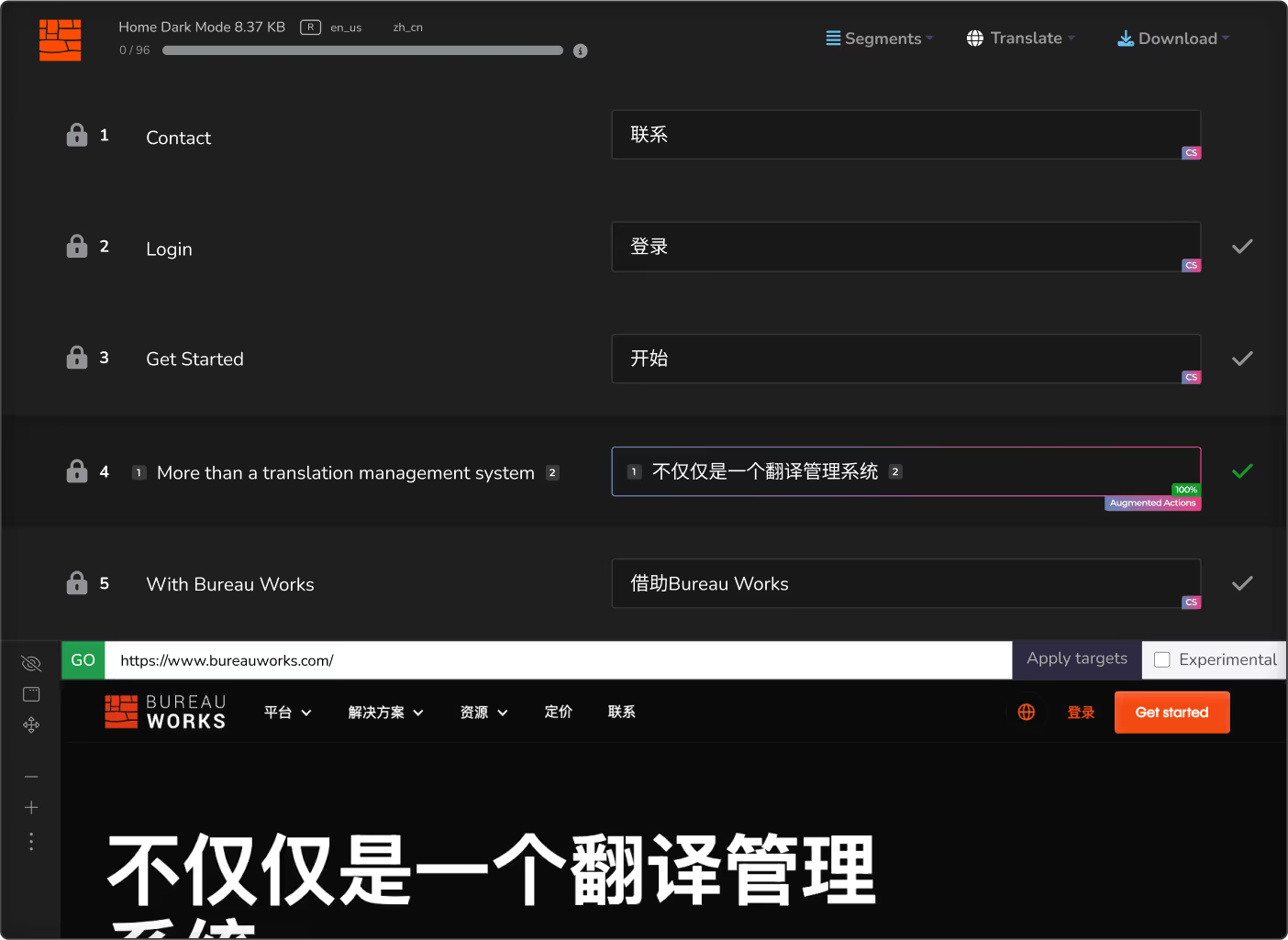
Platforms like Bureau Works were built specifically to manage this complexity.
Instead of treating translation as isolated tasks, Bureau Works helps teams organize localization around structured workflows and contextual data. This allows companies to maintain consistency across multiple locales while scaling their global content more efficiently.
In practice, that means linguists, reviewers, and product teams can collaborate within a single system designed for multilingual operations.
The goal isn’t just translation. It’s clarity across markets.
The Real Meaning of a Locale
If you zoom out, a locale is not just a technical identifier like en-US or fr-FR. It represents something deeper.
A locale defines how a product fits into a cultural environment. It shapes how users interpret numbers, read dates, understand tone, and trust messaging.
In other words, a locale is the bridge between a global product and a local audience. And building that bridge well is what localization is all about.
If your team is working across multiple languages and markets, managing locales efficiently becomes essential.
Bureau Works provides the infrastructure to organize multilingual workflows, maintain terminology consistency, and scale localization across dozens of locales without losing context.
Create your account and start managing your global content with clarity.
👉 Sign up for Bureau Works and bring structure to your localization strategy.
Unlock the power of glocalization with our Translation Management System.
Unlock the power of
with our Translation Management System.