

Translate API Pricing: What You’re Really Paying For


There’s a quiet seduction in translation APIs.
A developer opens a dashboard. There’s a pricing table. $10 per million characters. $20 per million. Sometimes even less.
It feels simple. Upload text. Get translation. Pay per character. But language has a way of resisting simplicity.
And the moment translation moves from experimentation to production, a new question appears: What does translate API pricing actually represent?
Because the number on the pricing page is rarely the full story.
What Is a Translation API?
A translation API allows software systems to send text to a machine translation engine and receive the translated result programmatically. Instead of pasting text into a website, applications can automatically translate content through code.
Popular translation APIs include services from:
- Google Cloud Translation
- Microsoft Translator
- Amazon Translate
- DeepL API
They are widely used for:
- websites
- mobile apps
- customer support tools
- chat systems
- product catalogs
- documentation
In other words, translation APIs are not just tools. They are infrastructure for global software.
How Translate API Pricing Works
Most translation APIs follow a usage-based pricing model. The typical metric is price per million characters translated.
A simplified example might look like this:
- $10 per million characters
- $15 per million characters
- $25 per million characters
At first glance, this feels straightforward. More text means higher cost. But once companies begin operating across multiple languages, the math starts to shift. Because translation volume grows quickly.
A single product catalog update can generate millions of characters. A large knowledge base can multiply that number several times over.
Suddenly, the cost calculation becomes less about a single translation request and more about continuous multilingual operations.
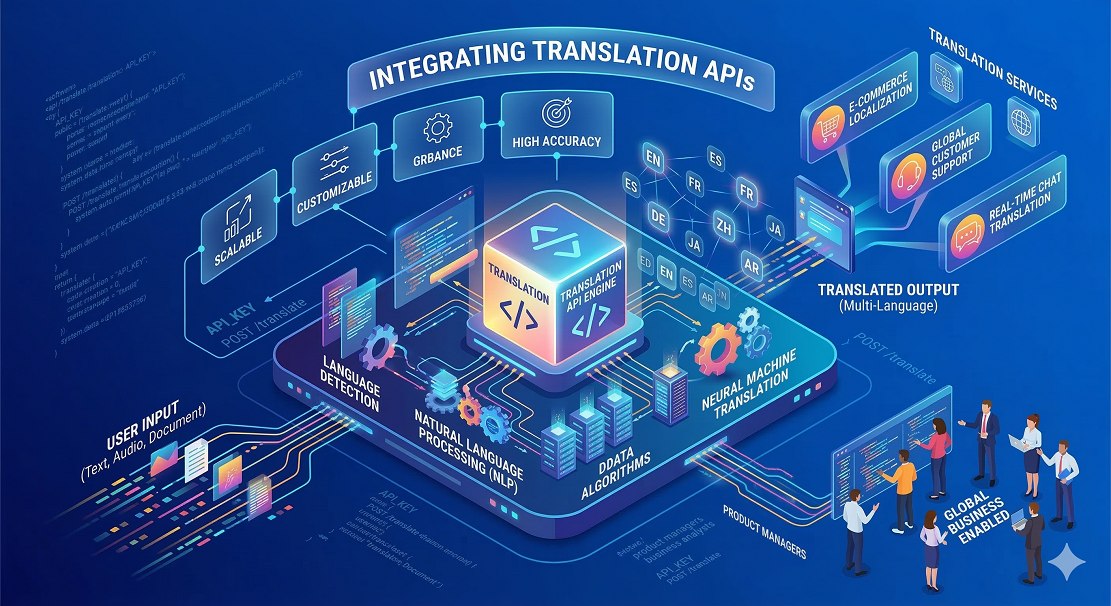
The Hidden Layers Behind API Pricing
Translation APIs are powerful, but they solve only one piece of the localization puzzle. They generate translated text. What they don’t manage is everything that happens around it.
For example:
Terminology consistency
Different translation calls may produce slightly different results for the same term.
Version control
Content evolves constantly. Tracking what changed becomes critical.
Human review
Some content requires verification before publication.
Context awareness
A single sentence can mean different things depending on where it appears in a product or interface.
These challenges rarely appear in API pricing documentation. But they quickly become visible once translation moves into real workflows.
When Cheap Translation Becomes Expensive
Ironically, the cheapest translation API isn’t always the cheapest solution. Because the real cost of translation often emerges outside the API itself.
Teams start building additional systems to manage:
- translation memory
- terminology databases
- workflow approvals
- multilingual versioning
- quality control
Developers end up stitching together internal tools to handle what the translation engine alone cannot manage. Over time, the infrastructure around the API becomes more complex than the translation call itself.
This is where many organizations realize something important:
Translation isn’t just a service call. It’s a system.
Translation Infrastructure vs. Translation Engines
A translation engine predicts words. A localization platform manages language. That distinction is subtle, but it changes the architecture of multilingual products.
Platforms designed for localization organize translation into structured workflows that combine:
- machine translation
- human review
- terminology management
- translation memory
- quality checks
- collaborative editing
Instead of translating the same content repeatedly, systems begin learning from previous translations. Consistency improves. Costs stabilize.
And translation becomes part of a controlled process rather than a series of isolated API calls.
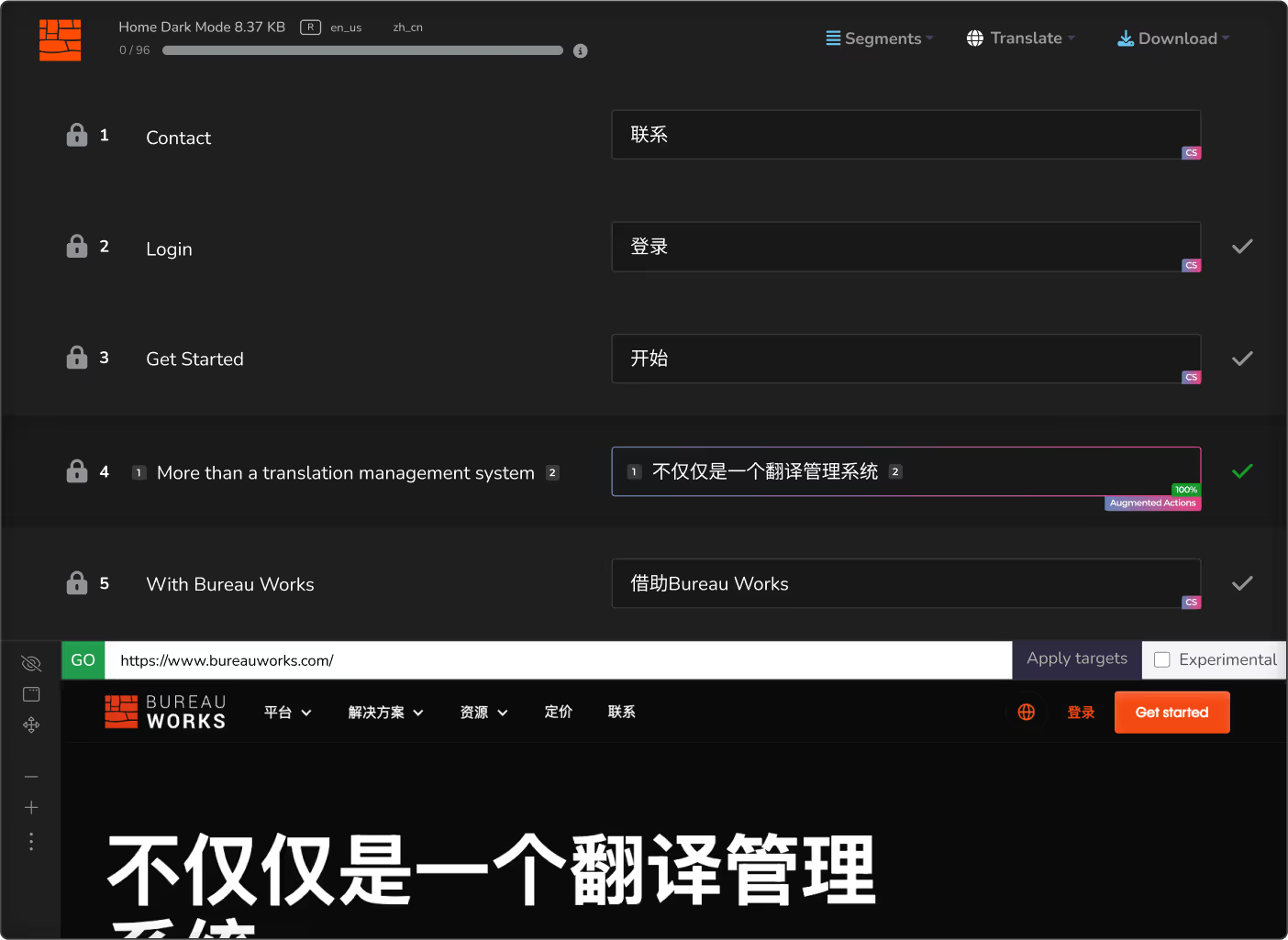
Where Platforms Like Bureau Works Enter the Picture
Many companies start their multilingual journey using a translation API directly.
It’s fast, flexible, and easy to integrate.
But as content scales across languages, teams often need more visibility and governance over how translation happens.
This is where platforms like Bureau Works come into play.
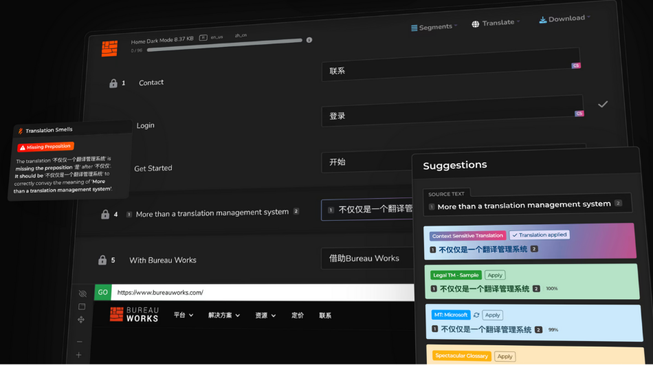
Bureau Works integrates machine translation technologies while providing the surrounding infrastructure needed to manage multilingual content at scale. Instead of relying solely on per-character translation calls, teams can organize workflows that include translation memory, contextual review, terminology control, and automated quality checks.
The goal isn’t to replace translation engines.
It’s to orchestrate them intelligently.
The Real Question Behind Translate API Pricing
When companies search for translate API pricing, they are often trying to estimate translation costs. But pricing tables rarely answer the deeper question.
The real question is: How will translation operate inside your system?
Is it a simple tool for occasional content? Or is it part of the infrastructure that powers your global product?
Because once translation becomes infrastructure, the conversation shifts from price per character to how language flows through your organization.
Translation at Scale Is an Architectural Decision
The future of multilingual systems is not about choosing the cheapest translation API. It’s about designing translation workflows that combine automation with context and oversight.
Machines generate text quickly. Humans verify meaning. Systems keep everything consistent.
That balance is what allows global products to move fast without losing clarity.
If your team is exploring translation APIs and pricing models, it may be time to think beyond the translation call itself.
Bureau Works provides the infrastructure to manage translation workflows, integrate machine translation engines, and maintain terminology and quality across languages, all in one platform.
Create your account and see how multilingual operations become easier when translation is treated as a system, not just an API.
👉 Sign up for Bureau Works and start building your global language workflow today.
Unlock the power of glocalization with our Translation Management System.
Unlock the power of
with our Translation Management System.