


Context Sensitive Translate
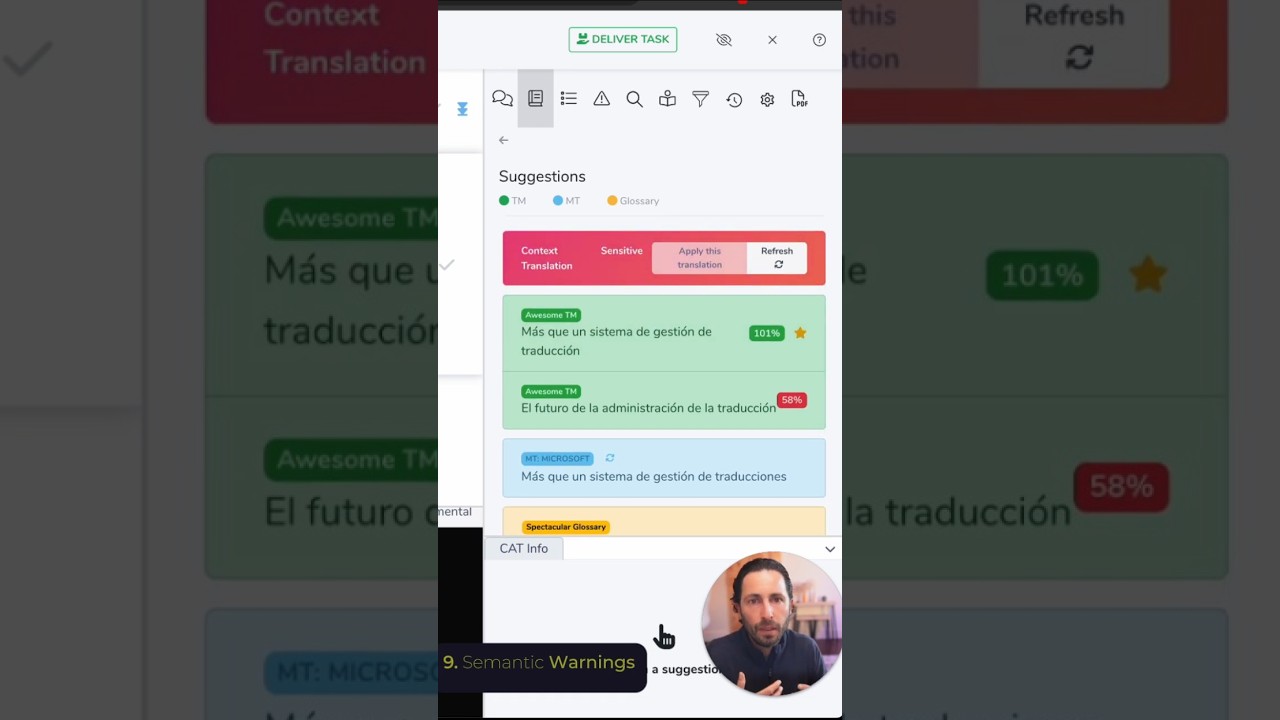
Context Sensitivity blends Translation Memory, Machine Translation, and Glossaries into a single contextual feed that learns with you and from you. In our analysis of 4.3 million translated segments, this approach delivered up to 39% higher productivity than standard machine translation post-editing.

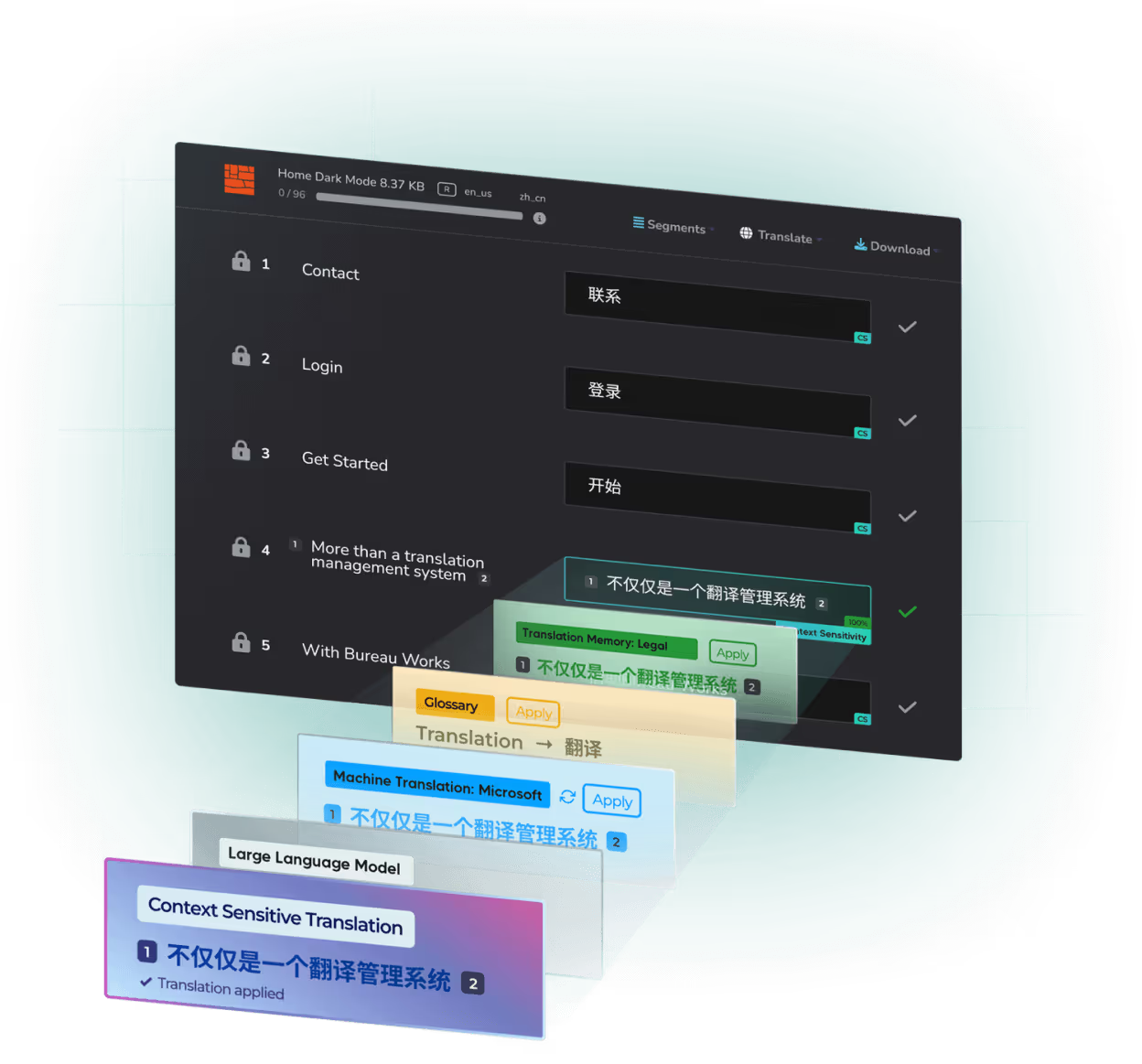





The Integrated AI Layer Translators Actually Like
Neural Machine Translation Post-Editing often ignores your knowledge base and preferences. That is why it frequently feels repetitive and frustrating. Context Sensitivity is different because it incorporates your translation memory, your glossary, and your choices into the workflow so output improves as the work happens.

Uses Your Knowledge Base
Context Sensitivity does not treat translation as a blank slate. It actively leverages your translation memory and glossary so suggestions match your terminology and past decisions.

One Unified Feed
Instead of forcing translators to compare separate sources, Context Sensitivity merges memory, machine translation, and terminology into one smart recommendation stream.

Learns From Every Edit
Every interaction informs the next suggestion. Translators stop fixing the same issues repeatedly because the system adapts as they work.
Context Sensitive Translation for Real Work
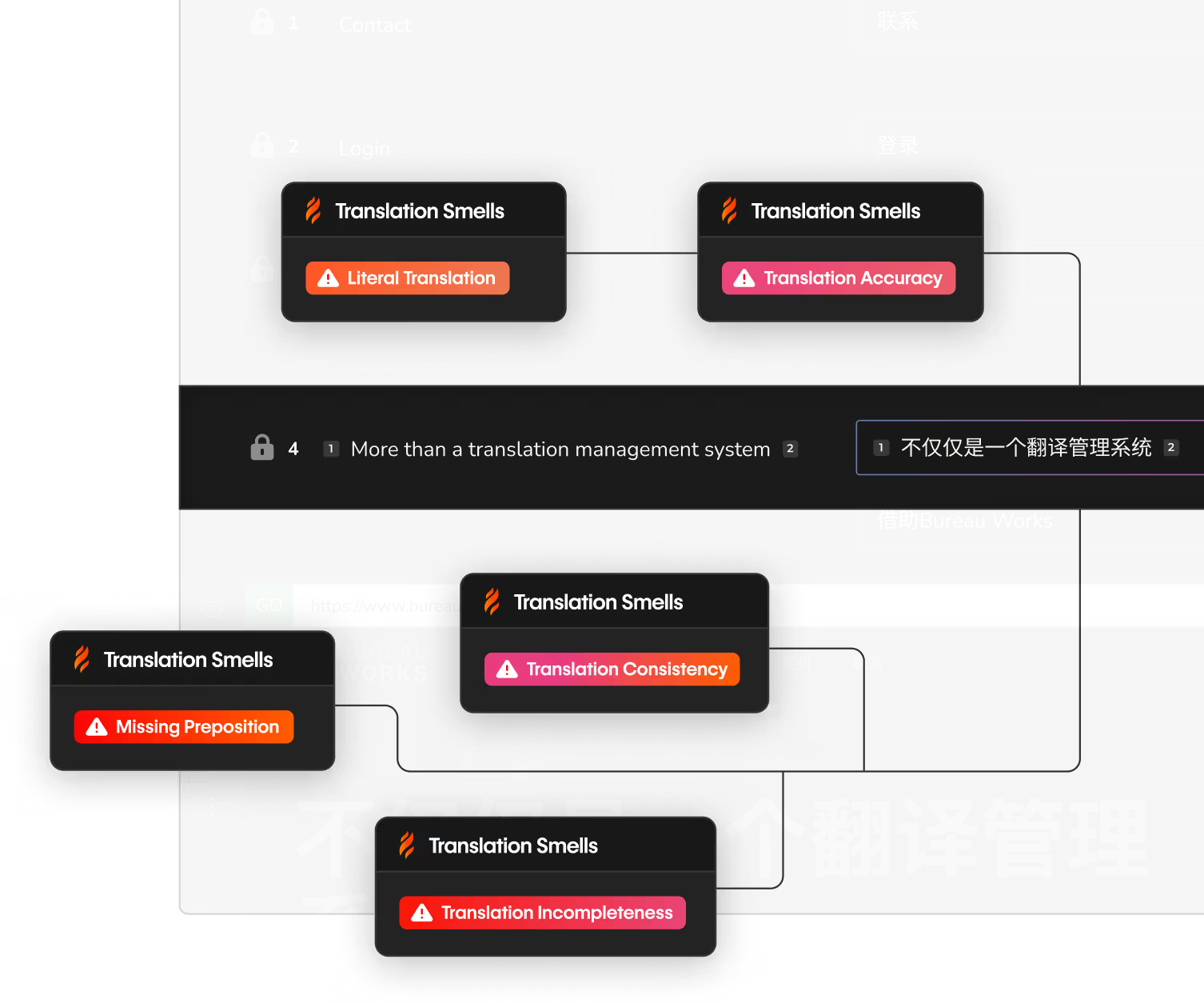
Context Sensitivity goes beyond typical automation by using AI to make decisions based on context and past translation content. It is not only syntactic, it is semantic. It does not just rearrange sentence structure, it aims to preserve meaning, intent, and consistency across the project.
What is Context Sensitive Translate?
Context Sensitive Translate meshes Translation Memories, Machine Translations, and Glossaries together into a single smart, contextualized feed. It learns with you and from you, improving quality and speed at the same time.
If you want the simplest summary, it acts like a smart blender that combines everything you already know into suggestions that get better as the project progresses.
Improve Productivity by 39%
We analyzed 4.3 million translated segments to measure how Context Sensitivity compares to standard machine translation workflows. The result was a productivity increase of 39% in the segments we studied.
You can explore the research and judge the methodology for yourself, but the outcome is simple: translators move faster when the system reflects their real preferences instead of forcing generic output.
A Better Authorship Experience
Translators should not have to make the same correction again and again. With Context Sensitivity, every segment interaction informs the next suggestion in terminology, tone, and phrasing. The translator shapes the engine’s output as they go, which creates a stronger sense of authorship and reduces repetitive editing.
This is one of the reasons translators respond more positively to Context Sensitivity than to typical post-editing flows.
Semantics Over Syntax
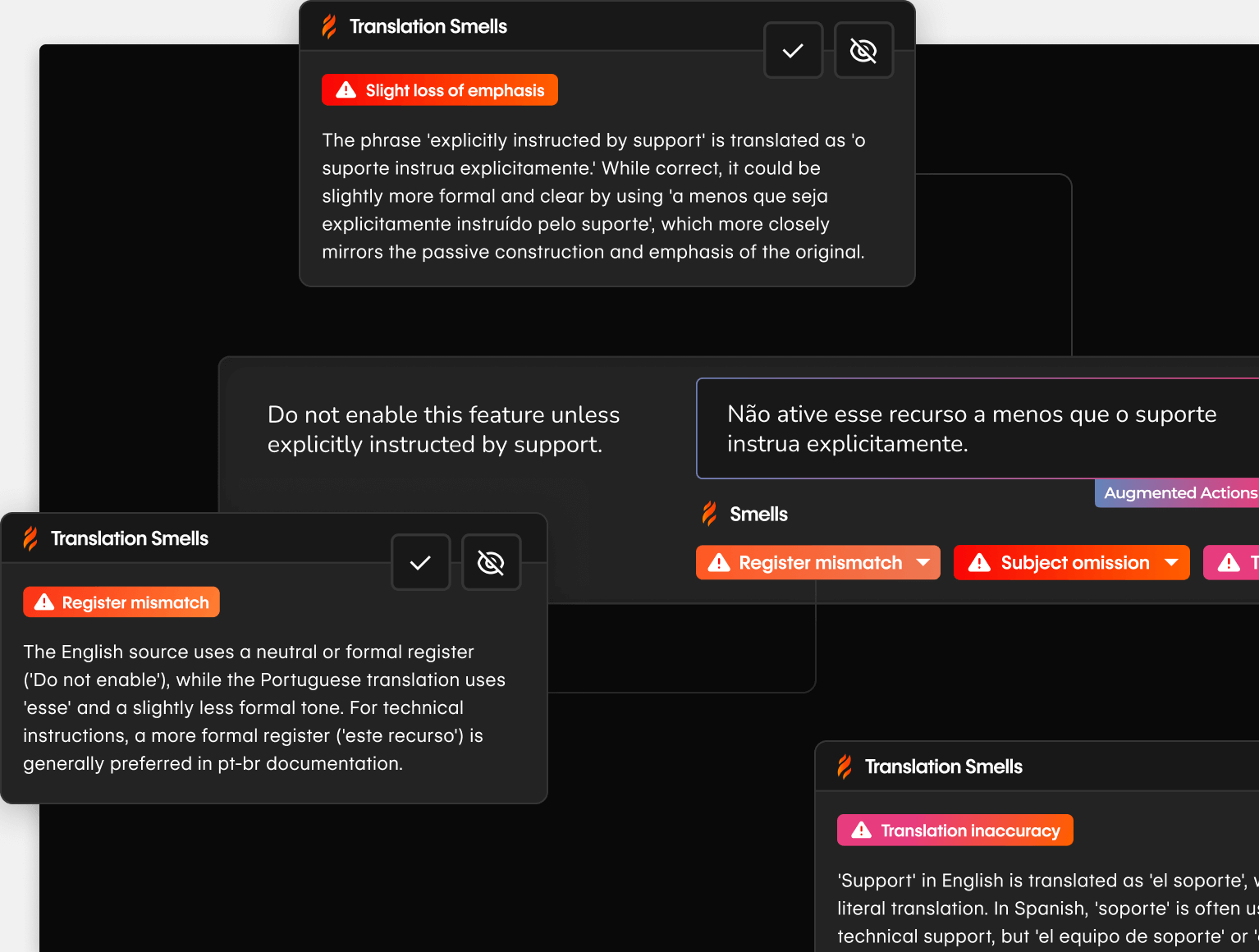
Syntax is about how a sentence is structured and how elements relate to each other. Semantics is about what the sentence means in context and what it implies. Translation quality depends on meaning first, not just grammatical correctness.
Context Sensitivity performs semantic analysis because it evaluates words within context, allowing translators to choose the best match based on style, thematic references, and genre.

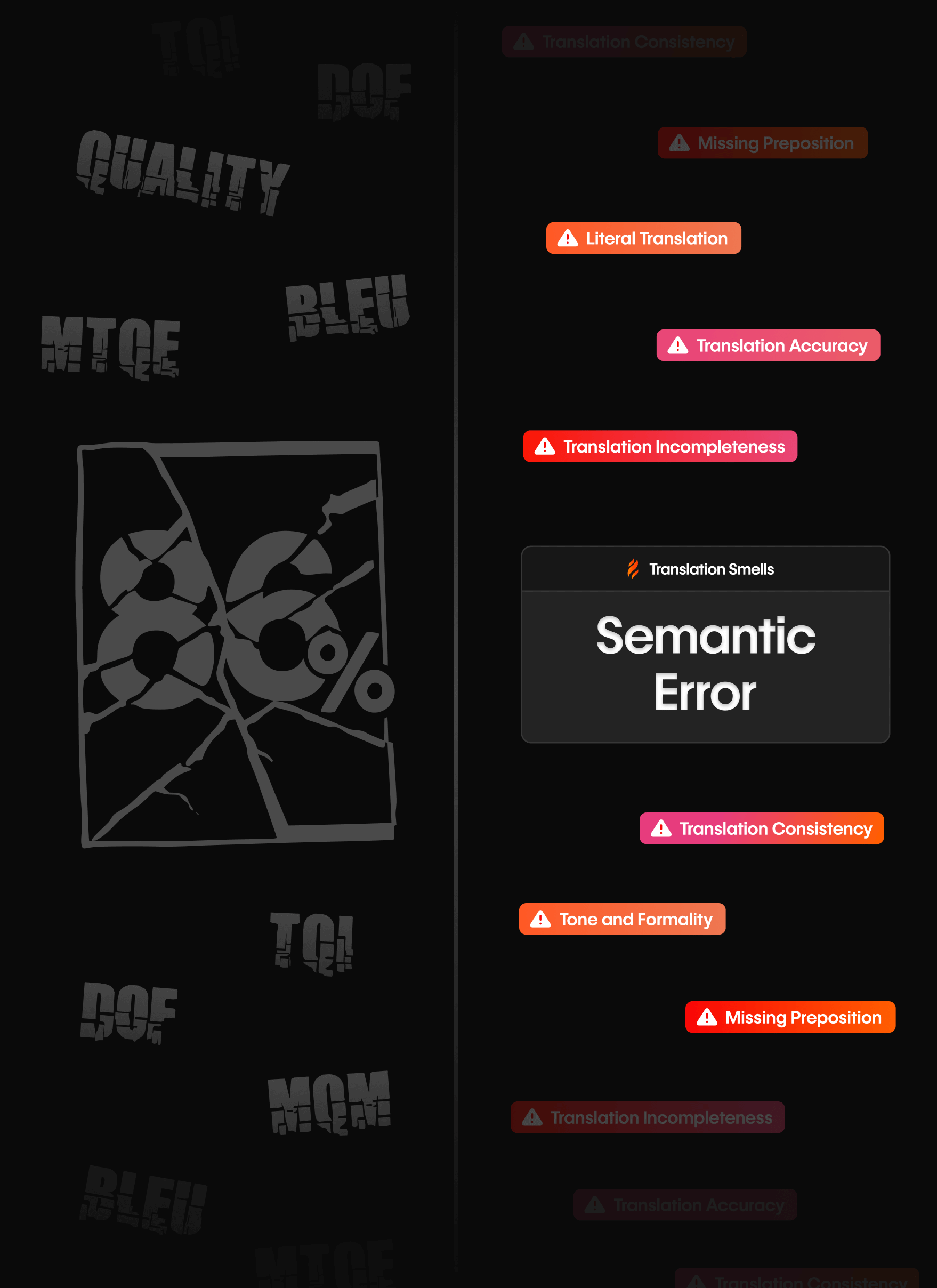
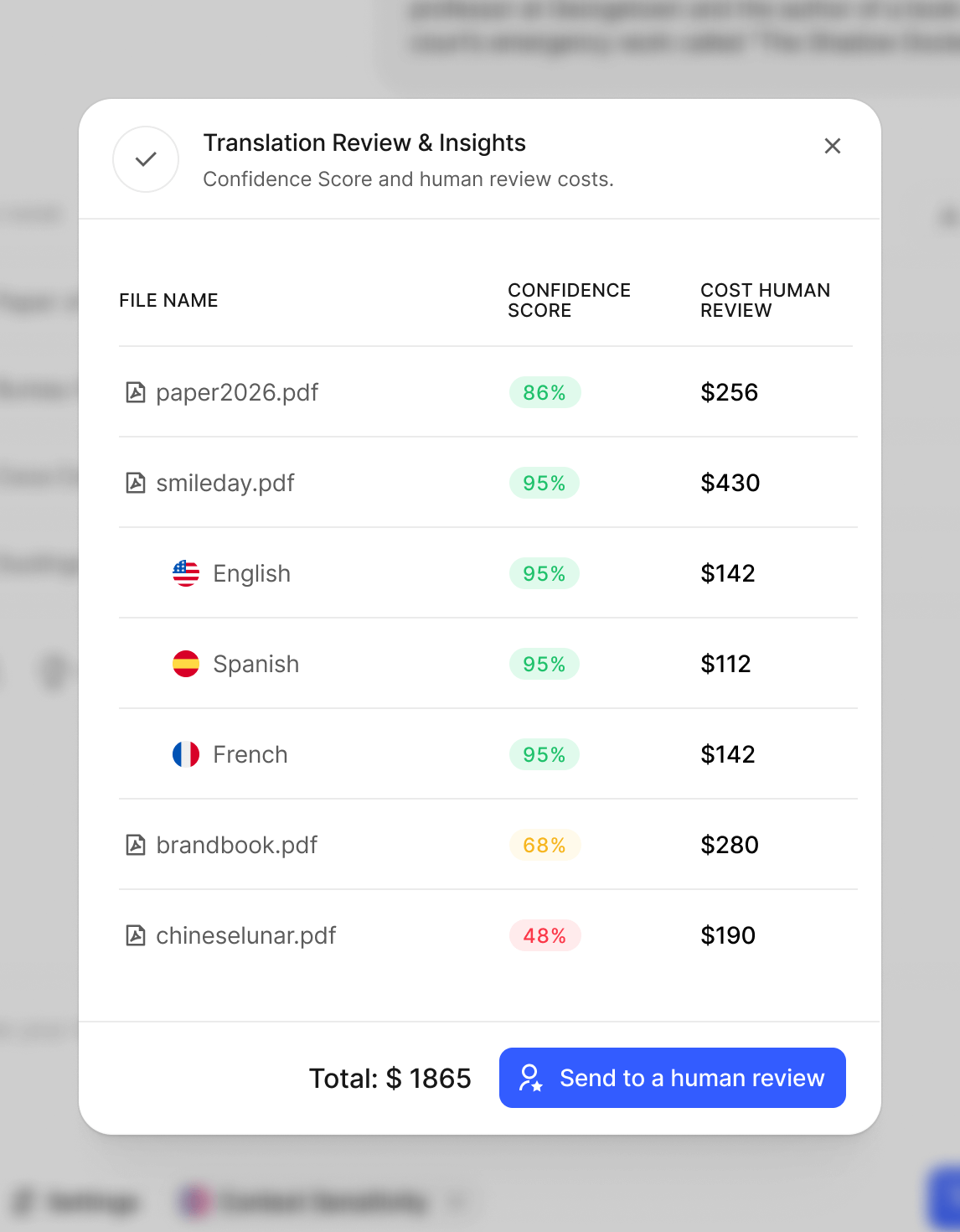
The God Metric is Dead:
Why words are smarter than numbers
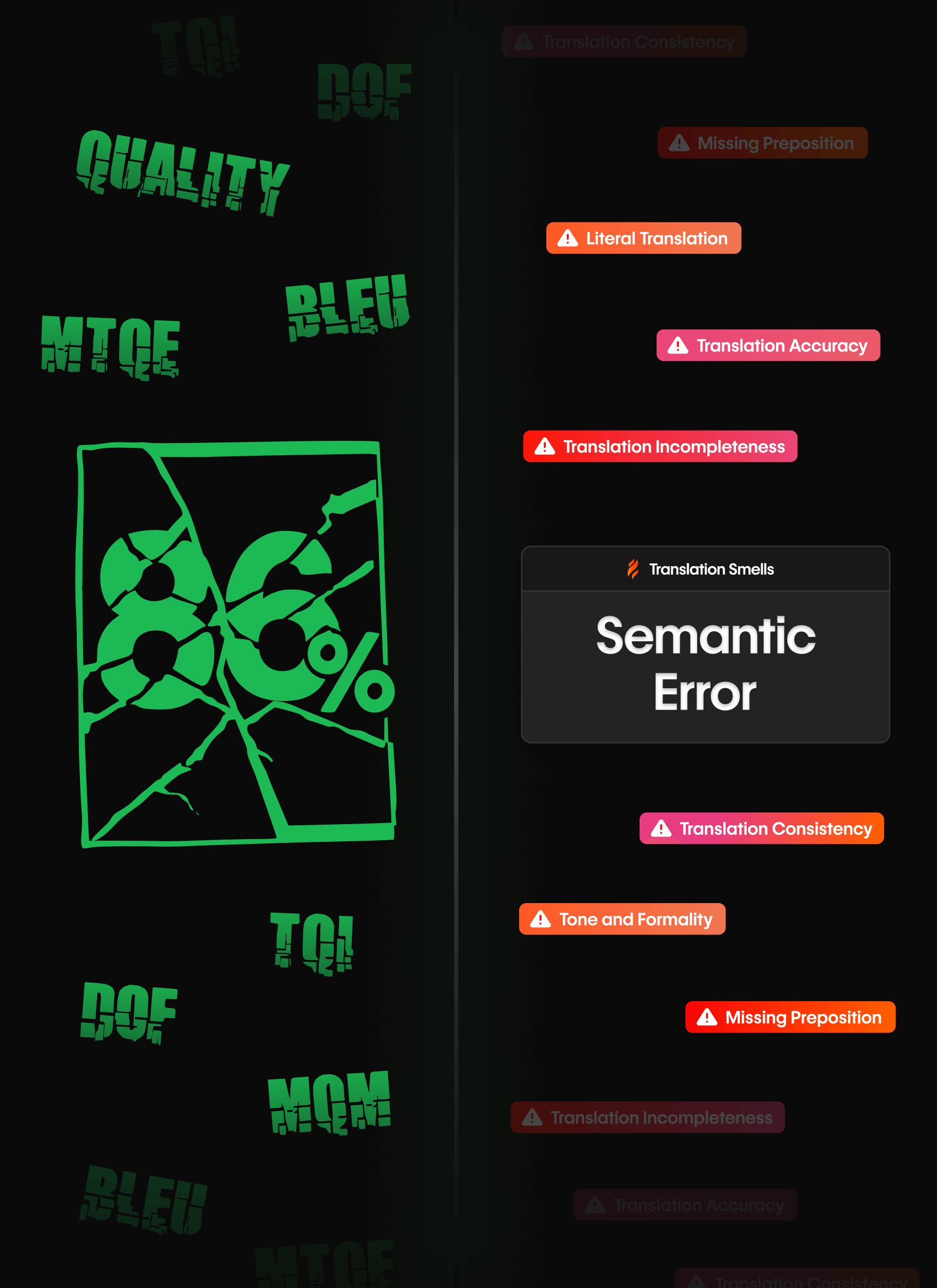
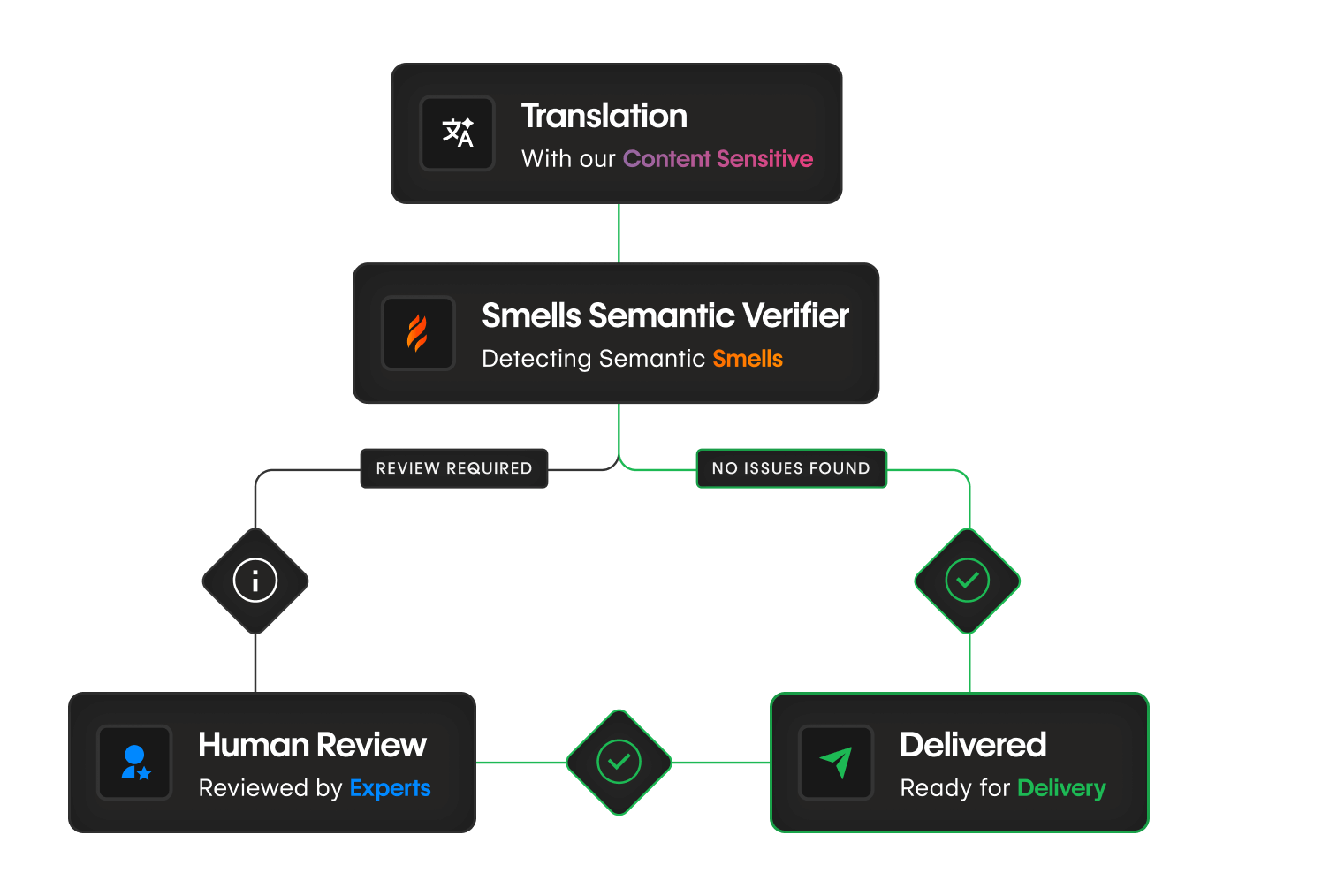
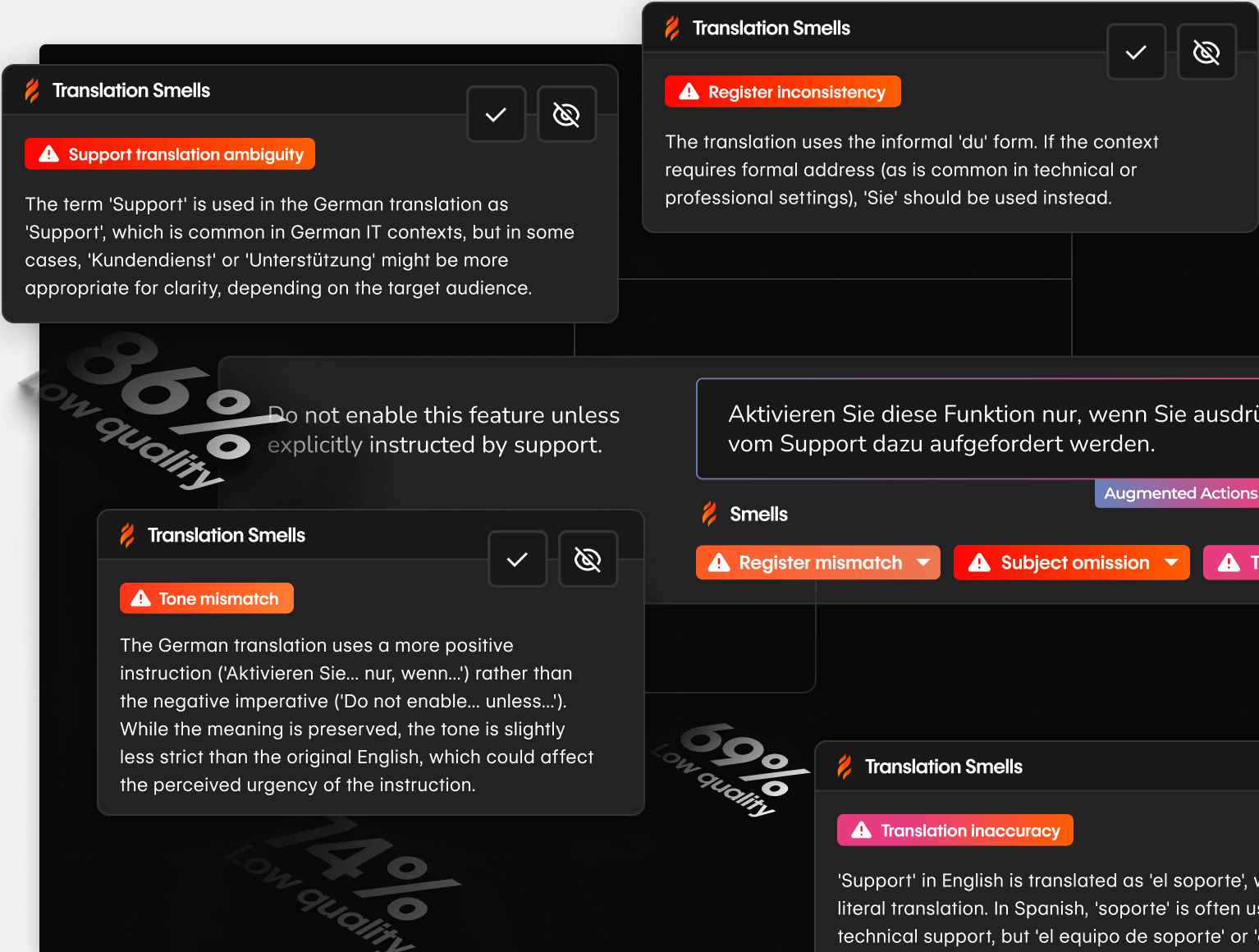
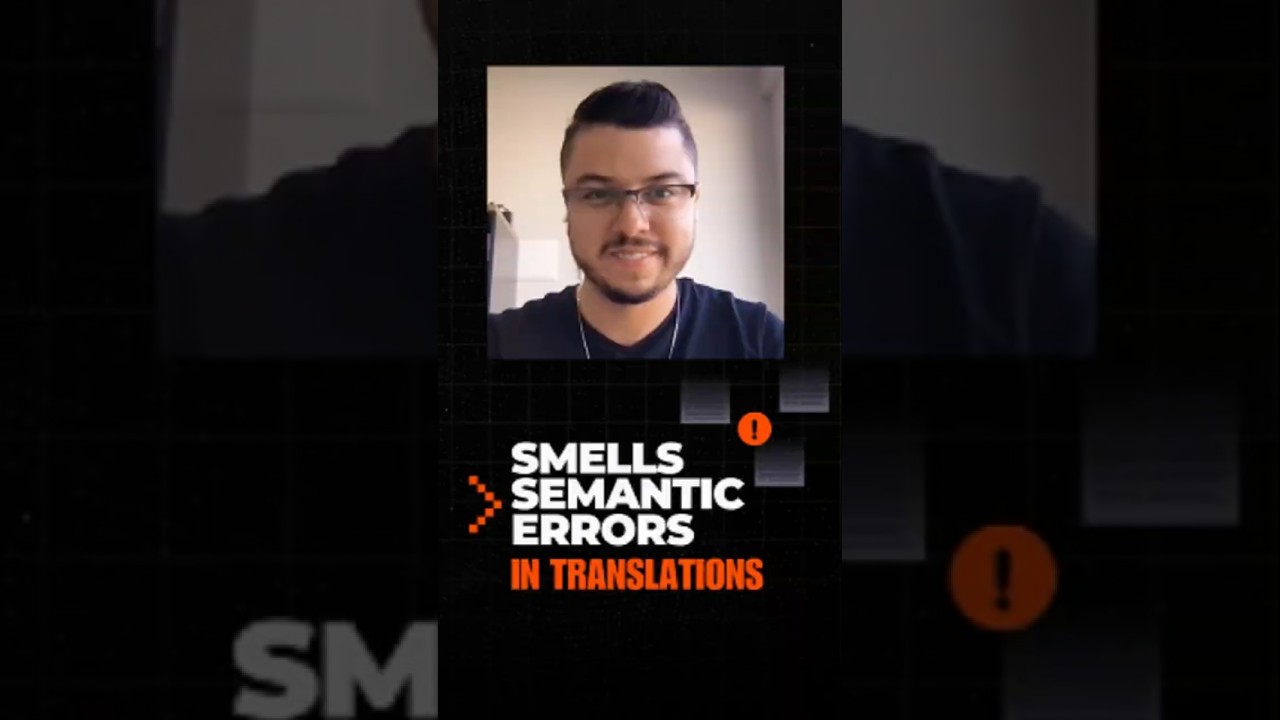
Why “86% quality” hides real risk, and how semantic diagnostics restore control.

The Three Pillars of Context Sensitivity
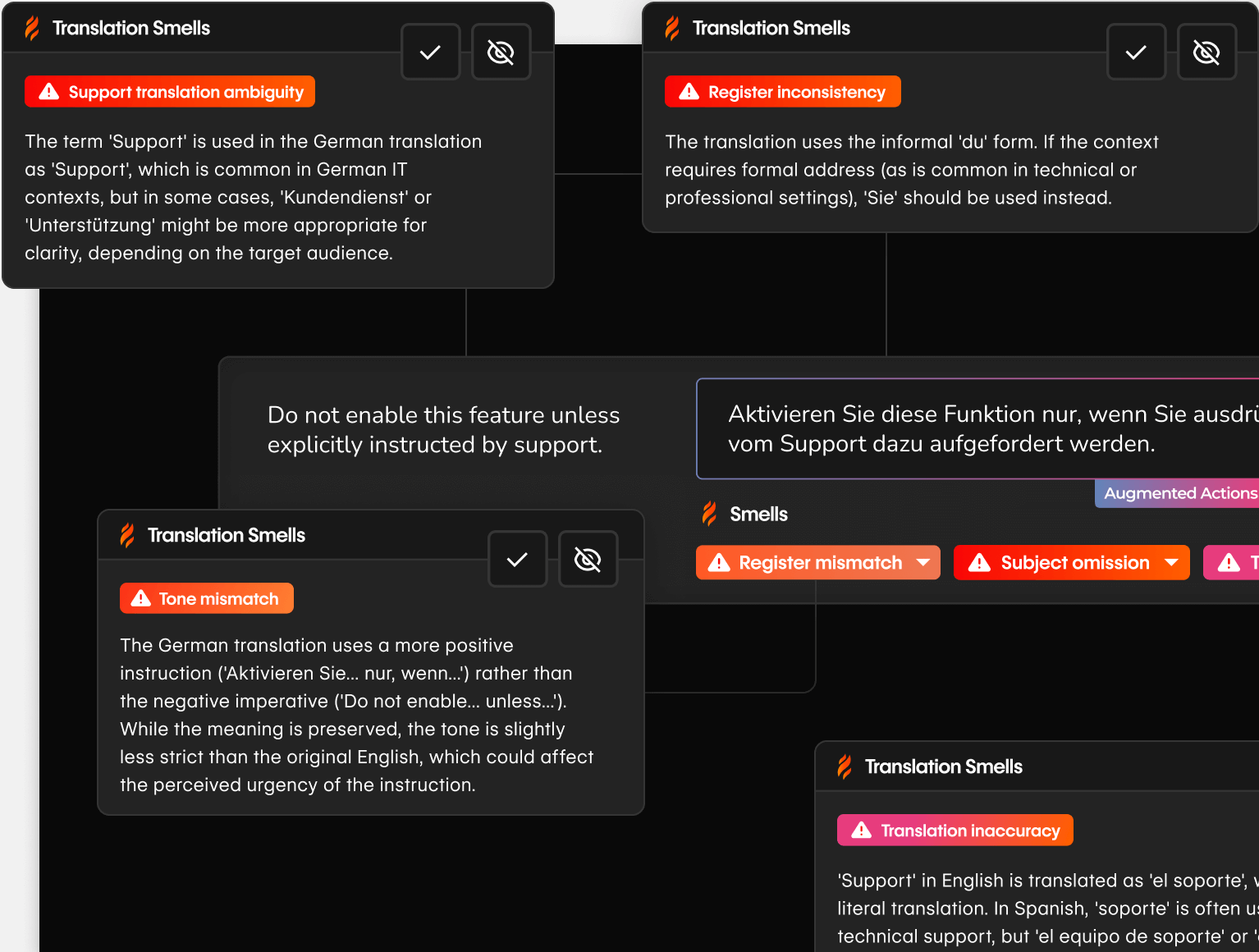
Context That Moves Work Forward
Context Sensitivity turns translation into a decision guided by real context, not just a generic pre-translation output. It improves speed, consistency, and authorship while keeping the translator in control.

Up to 39% Productivity Gain
Measured across millions of translated segments compared to standard MT post-editing.

Unified Suggestion Feed
TM, glossary, and MT work together in a single contextual stream.

Learns From Every Edit
Choices made now improve suggestions later in the same project.

Terminology Consistency
Glossary preferences carry forward without repetitive fixes.

Better Authorship
Translators shape the output instead of cleaning the same errors repeatedly.

Semantic Awareness
Meaning stays central, not just grammatical correctness.
Less Post-Editing Fatigue
Fewer repeated corrections, fewer mechanical edits, more real translation work.
Translator-First Workflow
Designed to increase acceptance, not resentment, among linguists.
Works With Your Existing Sources
Leverages what you already have, including memory and glossary assets.

Ready to clear the air?
Stop settling for “Technically Correct.” Start demanding “Semantically True.”
Always Shipping
.png)
.png)
.png)
.png)
.png)

.avif)
.avif)
Short Videos
Videos to help you get started. Want to go further? Join our community.

Empiezagratis
Prueba Bureau Works durante el tiempo que desees con nuestro plan Starter gratuito. Adquiere un plan pago de Bureau Works para desbloquear el grado correcto de escalabilidad y características.
Comienza — es gratis