

There’s a simple question everyone in the language industry thinks they know the answer to.
How big is the translation industry?
The problem is that the answers don’t agree.
One report says $71B. Another says $32B. That’s not a rounding error.
That’s a gap big enough to change how companies invest, how agencies plan, and how professionals think about their future.
So which number is real?
Numbers don’t just measure markets. They shape behavior.
If the industry is $71B, we’re talking about scale. Growth. Big players. Big bets.
If it’s $32B, the story changes.
Margins matter more. Survival matters more. Relevance becomes fragile.
The number you believe quietly decides how you act.
That’s why this debate matters.
On February 19th, we’re slowing the conversation down
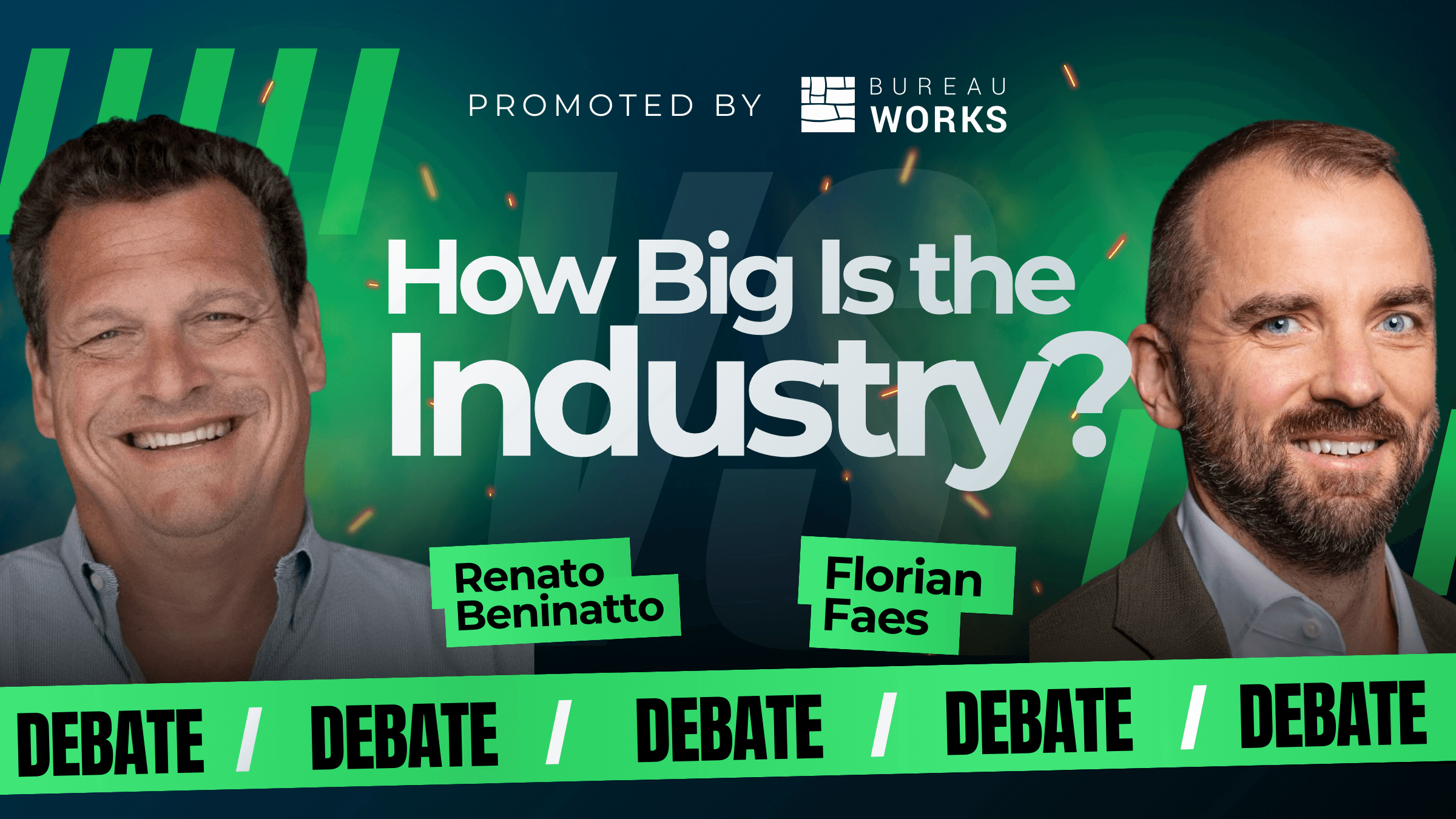
Bureau Works is hosting a live debate that goes past surface-level stats and polished slides.
This isn’t a webinar. It’s not a keynote. It’s a real conversation.
Renato Beninatto (Nimdzi) and Florian Faes (Slator) will sit together and challenge the assumptions most of us repeat without thinking.
Not just how big the market is, but:
- How agencies stay relevant from the buyer’s point of view
- Why word rates keep falling
- What actually counts as “translation spend”
- Whether we’ll ever see a $5B LSP
- And if prompt engineering is a real service or just a phase
These are the questions people usually debate offstage. Over coffee. After conferences end.
This time, they’re the main event.
Why this matters right now
Technology keeps accelerating. AI keeps changing the shape of work.
But markets don’t change just because tools exist.
They change when humans decide what those tools mean.
This debate isn’t about defending the past or worshiping the future.
It’s about understanding where decisions are already being made and why.
If you work with language, this affects you
Freelancer.
Agency owner.
Buyer.
Operator.
If your work depends on language, the size of the market isn’t trivia.
It’s context.
And context is what helps us make better decisions.
Join us on February 19 for the 6th Day debate.
Not to get answers handed to you. But to hear the questions that actually matter.
Because clarity doesn’t come from certainty.
It comes from better conversations.
Unlock the power of glocalization with our Translation Management System.
Unlock the power of
with our Translation Management System.





.png)